
The United States saw the release of the Federal Reserve’s December meeting minutes, which revealed a clear division among policymakers regarding the future path of monetary policy, particularly in relation to inflation, labor market conditions, and the timing of the next interest rate cut. This came despite the committee’s decision to cut interest rates for the third time, by a vote of 9 to 3, to a range of 3.5%–3.75%. On the data front, pending home sales exceeded expectations with a monthly increase of 3.3%, while initial jobless claims declined to 199,000, signaling continued resilience in the labor market. This occurred alongside a larger-than-expected increase in US crude oil inventories and stability in the manufacturing PMI, which remained in expansionary territory at 51.8. In contrast, the euro area continued to face pressure in the industrial sector, with the manufacturing PMI declining to 48.8. Manufacturing PMIs in both the United Kingdom and Australia also came in below expectations, despite remaining above the expansion threshold. In China, economic data marked a positive turning point, as the manufacturing PMI returned to expansion at 50.1, ending the longest contractionary streak on record, which lasted eight months. This improvement was accompanied by stronger readings in the non-manufacturing PMI and the Caixin manufacturing PMI, signaling early signs of a gradual recovery in the world’s second-largest economy.
Market analysis
US dollar / Swedish krona
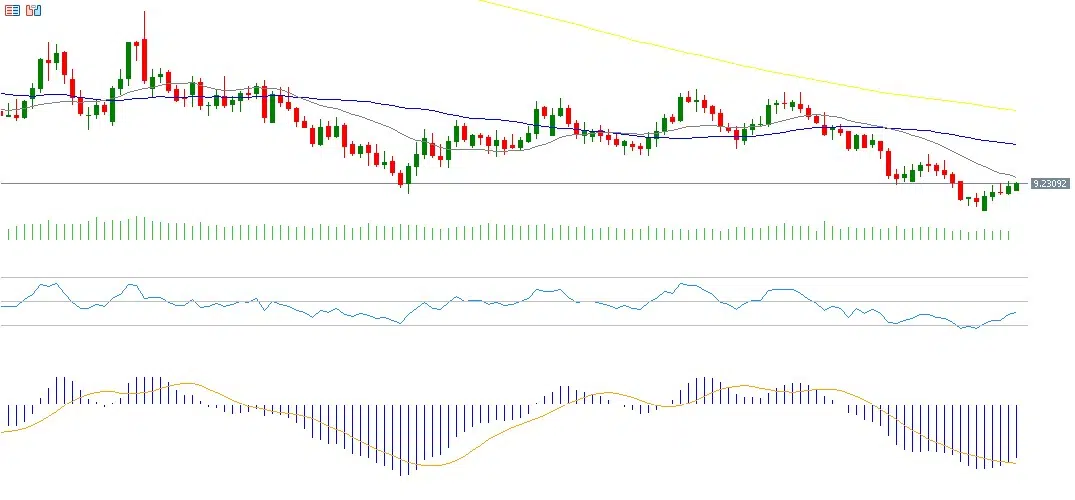
The Swedish krona emerged as the best-performing currency within the G10 group over the past year, supported by the strength of the domestic economy and monetary policy expectations. As a result, the US dollar/Swedish krona pair declined by approximately 17% over the past year. Recent Swedish economic data point to clear resilience in economic performance.
By contrast, the US dollar remains under selling pressure against most major currencies, particularly amid an environment of US interest rate cuts. From a technical perspective, the Relative Strength Index (RSI) is currently at 37, indicating negative momentum for the pair. In addition, the MACD indicator shows a bearish crossover between the MACD line and the signal line, reinforcing the negative outlook for the pair.
Palladium
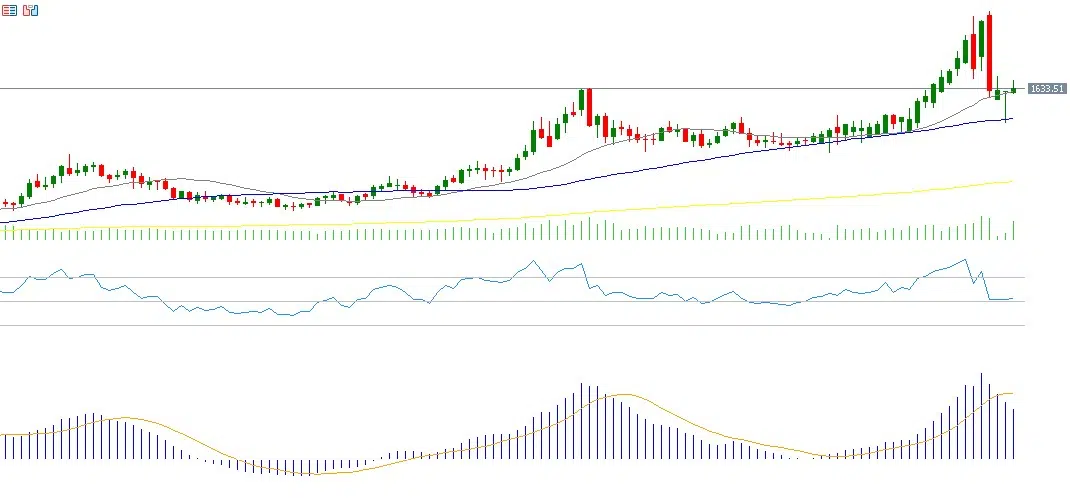
Palladium prices rose by approximately 81% over the past year and have continued their upward trend at the start of the current year, gaining around 2% in the first trading session of the year on Friday. Expectations point to the continuation of the bullish trend in the period ahead.
Palladium is currently supported by several key factors, most notably constrained supply, strong industrial demand, Western sanctions on Russia, and expectations of further US interest rate cuts. From a technical standpoint, the RSI is currently at 52, indicating moderate positive momentum that supports the upward trend.
FTSE 100 index
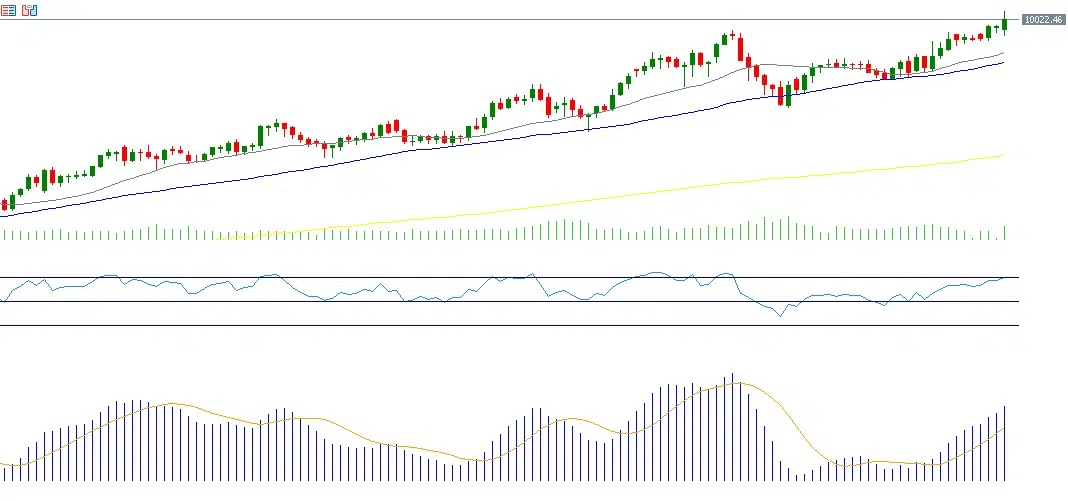
The UK’s FTSE 100 index continues its upward trajectory, closing at 10,052 points on Friday, January 2, 2026, marking an all-time high. The index rose by approximately 22% over the past year.
From a technical perspective, the RSI is currently at 69, reflecting strong bullish momentum. The MACD indicator also shows a bullish crossover between the MACD line and the signal line, supporting the continuation of the index’s upward trend.
Key events for this week
Markets are closely watching a series of important economic indicators and data releases this week that could have a direct impact on global financial markets.
On Monday, markets will focus on Japan’s manufacturing PMI, China’s Caixin services PMI, retail sales in Switzerland, as well as US construction spending and the ISM manufacturing PMI.
On Tuesday, services PMIs will be released in Australia, the United Kingdom, the euro area, and the United States, alongside the British Retail Consortium’s retail sales report in the UK.
On Wednesday, markets will monitor Japan’s services PMI, Australia’s consumer price index, the UK construction PMI, the euro area’s consumer price index, and Canada’s Ivey PMI. In the United States, data on ISM non-manufacturing employment changes, job openings, factory orders, and crude oil inventories will also be released.
On Thursday, attention will turn to Japan’s 30-year government bond auction, Switzerland’s consumer price index, and euro area unemployment and consumer confidence indicators. In the United States, weekly jobless claims and the trade balance data will be published.
Finally, on Friday, Japan’s household spending data will be released, along with China’s consumer and producer price indices and euro area retail sales. In the United States, markets will focus on the private non-farm payrolls report, the unemployment rate, average hourly earnings, and the University of Michigan consumer sentiment index. In Canada, employment change and unemployment rate data will be released.
Please note that this analysis is provided for informational purposes only and should not be considered as investment advice. All trading involves risk.