
Last week saw the release of relatively strong economic data across most major economies. In the United States, crude oil inventories rose by more than expected, alongside increasing price pressures reflected in higher headline and core Producer Price Index readings, while consumer inflation remained stable. Manufacturing activity indicators (Philadelphia Fed and Empire State) came in well above expectations, accompanied by stronger retail sales, higher existing home sales, and a decline in jobless claims, highlighting the resilience of the U.S. economy. In the euro area, industrial production recorded stronger-than-expected monthly growth, while the UK showed notable improvement with industrial production and monthly GDP outperforming forecasts. In China, data were particularly strong, with faster growth in exports and imports, a record trade surplus in 2025, and higher-than-expected new lending, pointing to improving economic momentum and support for both domestic and external activity.
Market Analysis
GBP/USD
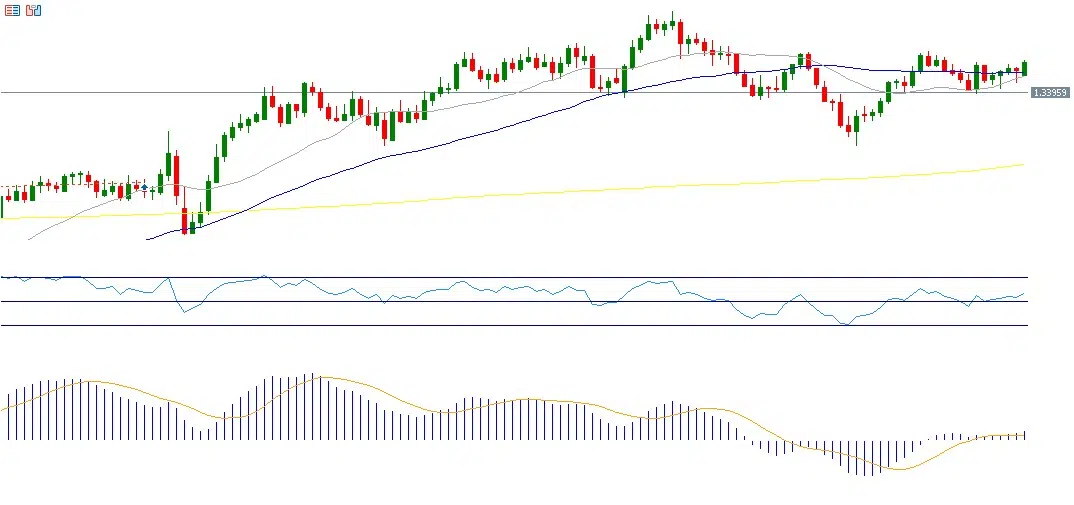
The British pound declined against the U.S. dollar for the third consecutive week, reaching 1.3363 on Thursday, January 15, 2026, its lowest level since December 22, 2025, before closing at 1.3376. The pair is down around 1% year-to-date. The Relative Strength Index (RSI) currently stands near 46, indicating negative momentum. In addition, a bearish crossover between the MACD line (blue) and the signal line (orange) reinforces the likelihood of continued downside momentum.
Netflix
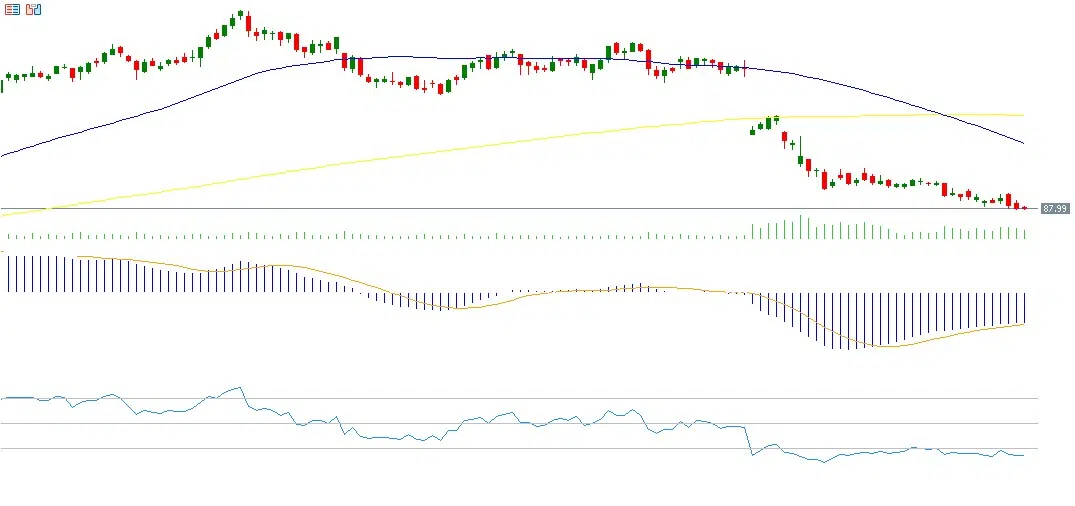
Netflix shares have declined by around 6% since the start of the year. Markets are awaiting the company’s fourth-quarter earnings release on Tuesday, January 20, 2026. Expectations point to earnings of $0.55 per share, compared with $4.27 per share in the previous reading, while revenues are forecast at $11.97 billion, up from $10.25 billion previously. The RSI stands at 27, placing the stock in oversold territory and signaling bearish momentum. A bearish MACD crossover further supports the negative outlook.
Gold
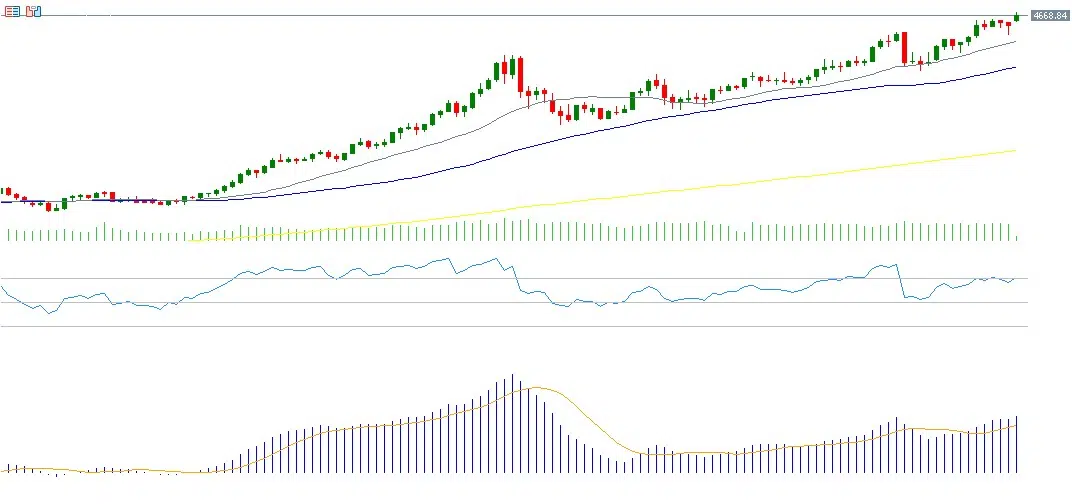
Gold prices rose for the second consecutive week, reaching a new record high of $4,643 on Wednesday, January 14, 2026, before closing at $4,597 on Friday, up around 7% year-to-date. Both fundamental and technical indicators continue to support gold prices going forward. Key drivers include ongoing political pressure from the Trump administration on the Federal Reserve and Chair Jerome Powell, escalating geopolitical tensions between the United States and Iran, and frictions between the U.S. and the European Union over Greenland. In addition, markets expect two or more U.S. rate cuts this year, while global central banks—led by the People’s Bank of China—continue to increase gold purchases to boost reserves. Investor outflows from long-term government bonds amid rising yields and concerns over fiscal sustainability further strengthen gold’s appeal as a traditional safe haven and an inflation hedge. The RSI currently stands at 67, indicating positive momentum, while a bullish MACD crossover supports the continuation of the upward trend.
FTSE 100 Index
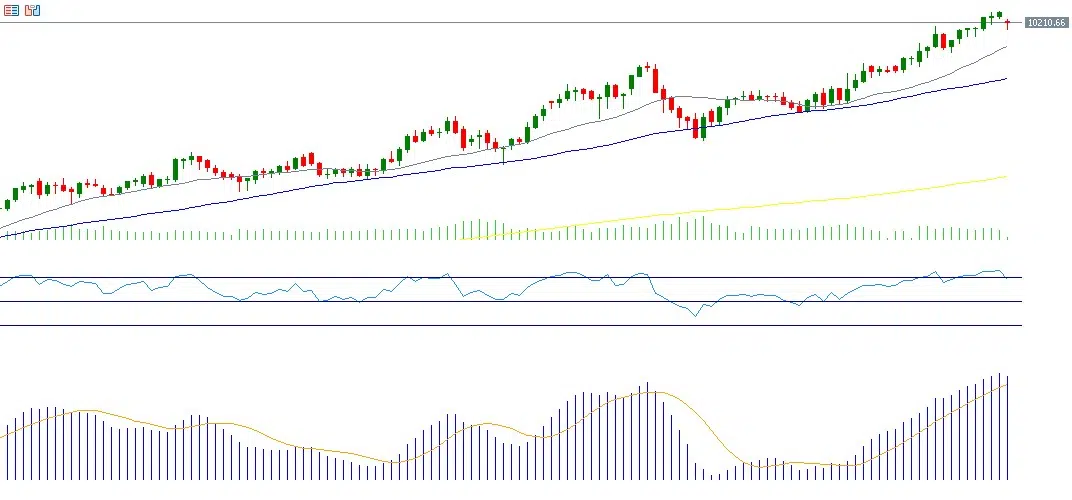
The UK’s FTSE 100 index continued its rally for the seventh consecutive session, reaching 10,256 points on Friday—its highest level on record. The index is up around 3% year-to-date, outperforming major U.S. equity indices such as the S&P 500 and Nasdaq 100. This strong performance reflects several factors, most notably better-than-expected UK economic data. Monthly GDP grew by 0.3%, exceeding expectations of 0.1% and improving on the previous contraction of -0.1%. Industrial production also rose by 1.1% month-on-month, well above forecasts of 0.2%. Additionally, the UK banking sector has shown strong momentum, led by HSBC, whose shares reached a new record high last week. Expectations of continued accommodative monetary policy or two rate cuts by the Bank of England this year have also supported the index. The RSI stands at 77, indicating overbought conditions and strong bullish momentum, while a bullish MACD crossover reinforces the positive outlook.
Key Events This Week
Markets are closely watching several important economic indicators and data releases this week.
On Monday, attention will focus on retail sales, industrial production, fixed asset investment, and the unemployment rate in China, alongside Japan’s industrial production and CPI data from the euro area and Canada.
On Tuesday, markets will monitor the People’s Bank of China’s benchmark lending rate, UK income data including bonuses and the unemployment rate, as well as Switzerland’s Producer Price Index.
On Wednesday, the UK Consumer Price Index will be released, together with U.S. pending home sales and construction spending data.
On Thursday, key releases include Japan’s exports and imports, employment change and unemployment data in Australia, and U.S. initial jobless claims, GDP, and core Personal Consumption Expenditures prices.
Finally, on Friday, markets will focus on the Bank of Japan’s interest rate decision, with expectations for rates to remain unchanged at 0.75%. PMI data for manufacturing and services will be released across Australia, Japan, the UK, the euro area, and the United States, alongside Japan’s CPI, retail sales data from the UK and Canada, and the University of Michigan’s core consumer sentiment index in the United States.
Please note that this analysis is provided for informational purposes only and should not be considered as investment advice. All trading involves risk.