
Last week showed mixed global economic data. The U.S. Federal Reserve kept interest rates unchanged within the 3.50%–3.75% range, broadly in line with expectations, with limited dissent inside the committee. Chair Jerome Powell stressed that inflation remains above target and it is too early to declare victory, while noting that the U.S. economy is still relatively resilient. U.S. data was mostly strong, with solid increases in durable goods orders and factory orders and a decline in crude oil inventories, while consumer confidence weakened and the trade deficit widened. In the Eurozone, data showed modest improvement with GDP growth and a lower unemployment rate. In Canada, the central bank held rates steady amid a wider trade deficit and slight monthly growth. In Asia, Australia recorded higher inflation, while Tokyo CPI in Japan slowed, highlighting continued divergence in economic conditions and monetary policy paths among major economies.
Market Analysis
USD/CHF
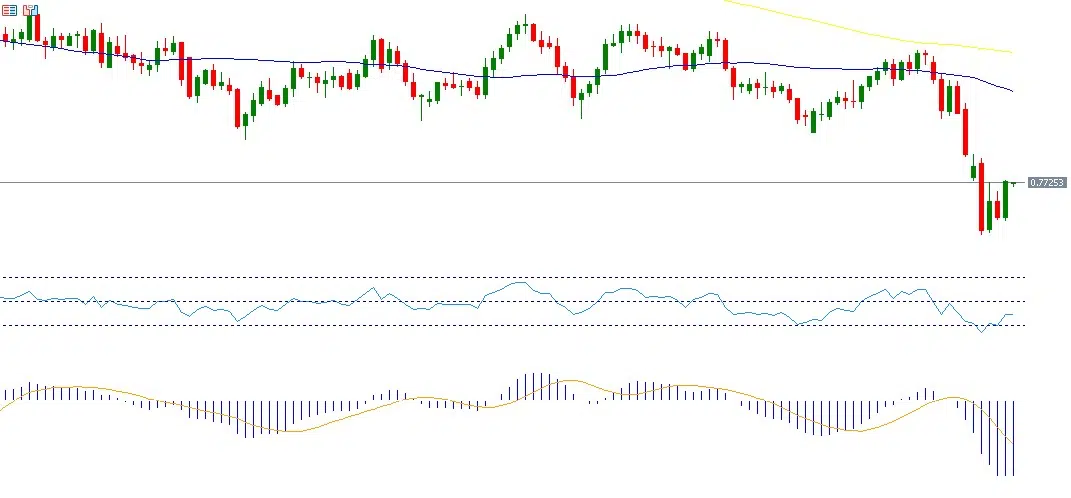
The U.S. dollar / Swiss franc pair fell to 0.7601 on Wednesday, January 28, its lowest level since 2011, before closing at 0.7725. The pair is down by about 3% year-to-date. The Swiss franc continues to outperform as a traditional safe-haven currency during periods of uncertainty, supported by relatively resilient Swiss economic data. The RSI currently stands near 39, pointing to negative momentum. The MACD shows a bearish crossover with the signal line, reinforcing downside momentum.
Alphabet
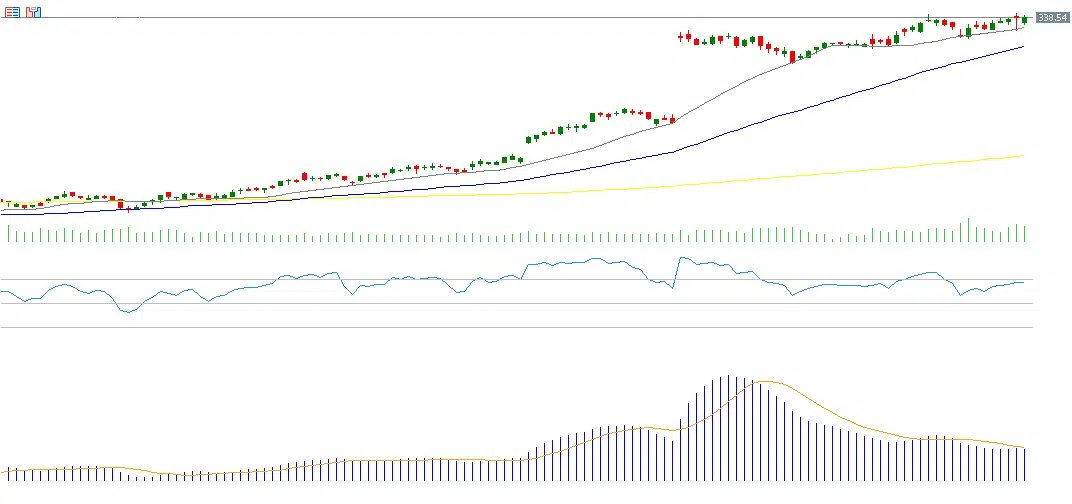
Alphabet shares are up roughly 8% since the start of the year. The company is scheduled to report earnings on Wednesday. Earnings per share are expected at $2.62 versus $2.15 previously, while revenue is projected at $110.97 billion compared with $96.47 billion in the prior reading. The RSI is around 66, indicating positive momentum. The MACD shows a bullish crossover, supporting the constructive technical outlook.
Gold
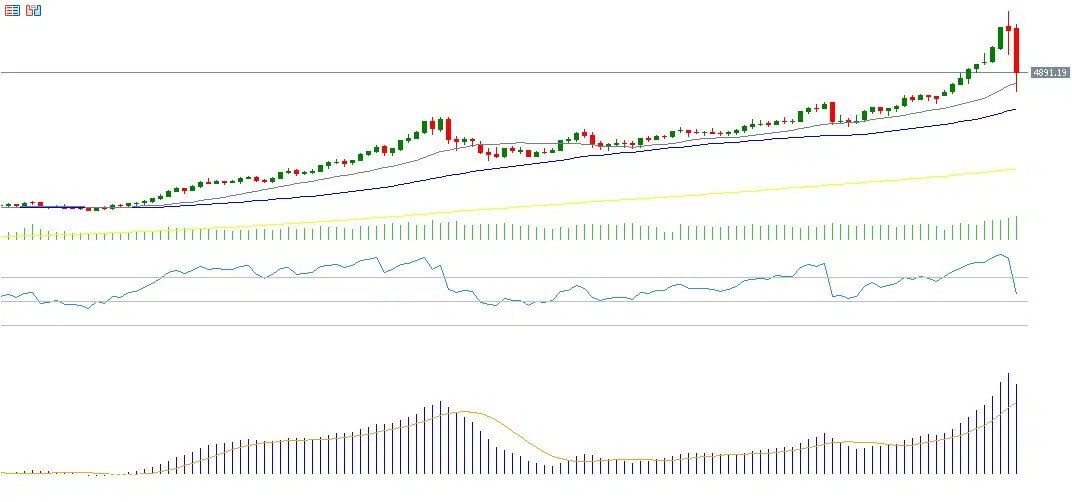
Gold prices dropped sharply on Friday by about 9% to $4,683, the lowest level since January 20, 2026, before closing at $4,894. Prices had reached a record high of $5,598 on Thursday. The decline was driven by several factors, including a rebound in the U.S. dollar following the appointment of Kevin Warsh, who is viewed as more hawkish on monetary policy, along with forced liquidation of positions to cover losses in other assets, especially U.S. technology stocks due to margin calls. Adjustments to leverage rules on the Chicago exchange also contributed to selling pressure in metals, in addition to retail investor caution after the pullback. Despite the correction, gold gained about 13% in January, marking a sixth consecutive monthly rise. Fundamental and technical factors remain broadly supportive, including geopolitical and trade tensions, continued central bank purchases, and inflation risks. RSI is near 56 and MACD shows a bullish crossover, indicating positive underlying momentum.
Nasdaq 100 Index
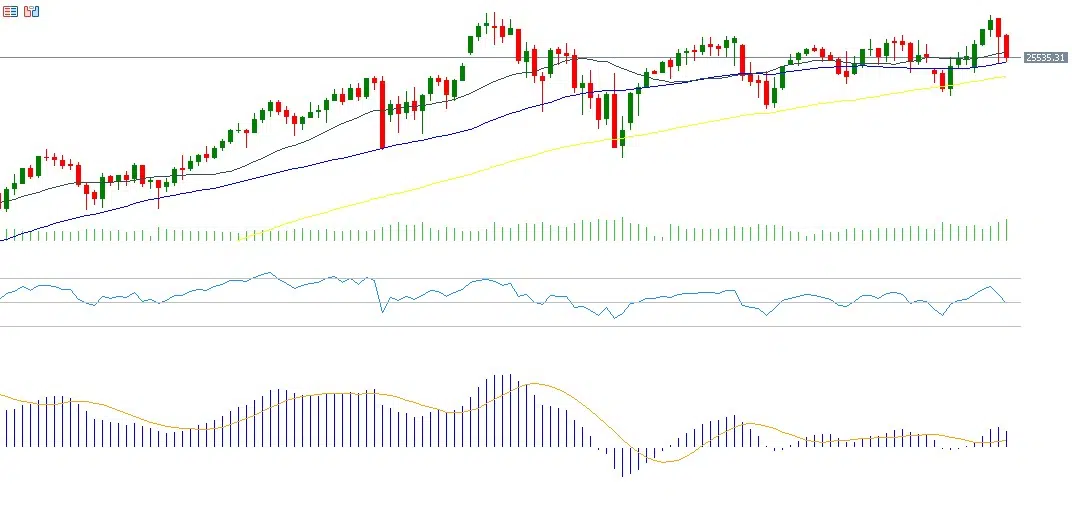
The Nasdaq 100 rose about 1.20% in January but slipped 0.21% last week due to selling pressure in technology stocks. Even so, overall momentum remains constructive, with the Philadelphia Semiconductor Index (SOX) up roughly 13% year-to-date. The MACD continues to show a bullish crossover, suggesting positive technical momentum.
Key Events to Watch This Week
On Monday, markets watch Caixin manufacturing PMI from China and manufacturing PMI releases from Australia, Japan, the Eurozone, the U.K., and the U.S., in addition to the U.S. ISM manufacturing index.
On Tuesday, the Reserve Bank of Australia interest rate decision is due, with expectations for rates to remain at 3.60%, alongside U.S. job openings data.
On Wednesday, Caixin services PMI from China and services PMI data across major economies will be released, together with U.S. ADP private employment change, ISM non-manufacturing PMI, and U.S. crude oil inventories.
On Thursday, interest rate decisions are expected from the Bank of England and the European Central Bank, both widely expected to keep rates unchanged, along with U.K. construction PMI, Eurozone retail sales, and U.S. jobless claims.
On Friday, markets focus on Japan household spending, the U.S. nonfarm payrolls report, unemployment rate, average hourly earnings, the Michigan consumer sentiment index, and Canada employment and Ivey PMI data.
Please note that this analysis is provided for informational purposes only and should not be considered as investment advice. All trading involves risk.