
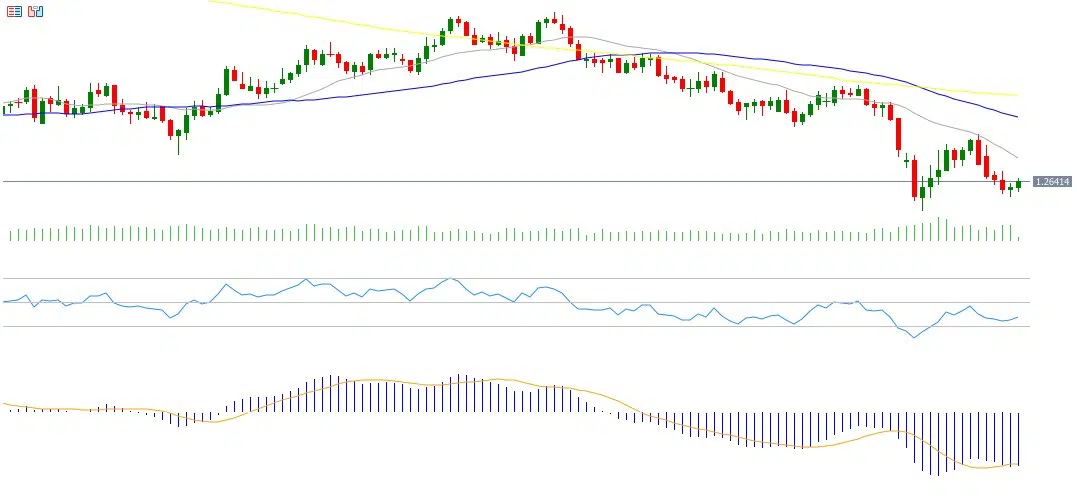
The US dollar against the Singapore dollar recorded a level of 1.2604 yesterday, its lowest since 28 January 2026, and is currently trading near the 1.2600 level. The pair has declined by around 2% since the beginning of the year to date.
Recent economic data from Singapore indicate that the Singapore dollar continues to show relative resilience. Industrial production on a monthly basis contracted by 13.3%, but this reading was better than the previous contraction of -7.8%. The Purchasing Managers’ Index rose in January to 50.5 points, exceeding the previous reading of 50.3 points. In addition, fourth-quarter GDP growth on a year-on-year basis accelerated to 6.9%, surpassing market expectations of 5.7% and the previous reading of 4.6%.
An additional factor supporting the Singapore dollar is the broad weakness of the US dollar against most major currencies, amid increasing uncertainty surrounding the US economic outlook. Markets are currently pricing in the possibility of two US interest rate cuts this year, which has weighed on the greenback. This uncertainty has been compounded by concerns over the independence of the Federal Reserve, given political pressure from US President Donald Trump on the incoming Fed Chair, Kevin Warsh, ahead of his official appointment, amid expectations of a more accommodative monetary policy aimed at supporting the economy ahead of the midterm elections. Furthermore, markets are also awaiting a ruling from the US Supreme Court on the legality of global tariffs by 20 February 2026.
Markets are closely monitoring today’s release of the US Consumer Price Index at 17:30 UAE time. Expectations point to a reading of 2.5%, lower than the previous 2.7%. Accordingly, caution is warranted, as any reading below expectations could further support the Singapore dollar and most foreign currencies against the US dollar.
From a technical perspective, the Relative Strength Index (RSI) stands at 32 points, approaching oversold territory, reflecting negative momentum in the USD/SGD pair. Meanwhile, the MACD indicator shows the MACD line trading below the signal line, confirming the continuation of bearish momentum.
In terms of support and resistance levels, a break below the pivot point at 1.2623 could open the way toward the next support levels at 1.2607, 1.2586, and 1.2570. On the upside, a move above the pivot could see the pair targeting resistance levels at 1.2644, 1.2660, and 1.2681.
Please note that this analysis is provided for informational purposes only and should not be considered as investment advice. All trading involves risk.