
The United States saw mixed but generally positive economic data alongside a cautious monetary stance, as the Federal Reserve kept interest rates unchanged within the 3.50%–3.75% range for the second consecutive meeting. The vote showed limited dissent, with one member favoring a 25-basis point rate cut, while the dot plot indicated only one rate cut this year and another next year. Jerome Powell maintained a hawkish tone, emphasizing that rate cuts will not occur until inflation declines and that policy must remain restrictive, while also noting that some members discussed the possibility of rate hikes. On the data front, indicators such as pending home sales, factory orders, and industrial production improved, while the Philadelphia Fed index rose and jobless claims declined. However, crude oil inventories increased more than expected, and producer price inflation accelerated, while new home sales declined and some regional indicators weakened. Powell also highlighted that the impact of geopolitical tensions and rising energy prices remains uncertain, stressing that current policy is appropriate while monitoring developments. The Eurozone saw the European Central Bank hold rates steady, with a slight uptick in inflation. The UK’s Bank of England also kept rates unchanged, with slight improvement in the labor market despite slower wage growth. Switzerland’s Swiss National Bank maintained very low rates, while the Bank of Canada held policy steady amid easing inflation. In Australia, the Reserve Bank of Australia raised rates despite higher unemployment, supported by strong employment growth. Japan’s Bank of Japan kept rates unchanged, with slowing export growth and rising imports. Meanwhile, China showed improvement in retail sales, industrial production, and investment, despite ongoing pressure in the property sector and rising unemployment, with the People’s Bank of China keeping lending rates unchanged.
Market Analysis
AUD/USD
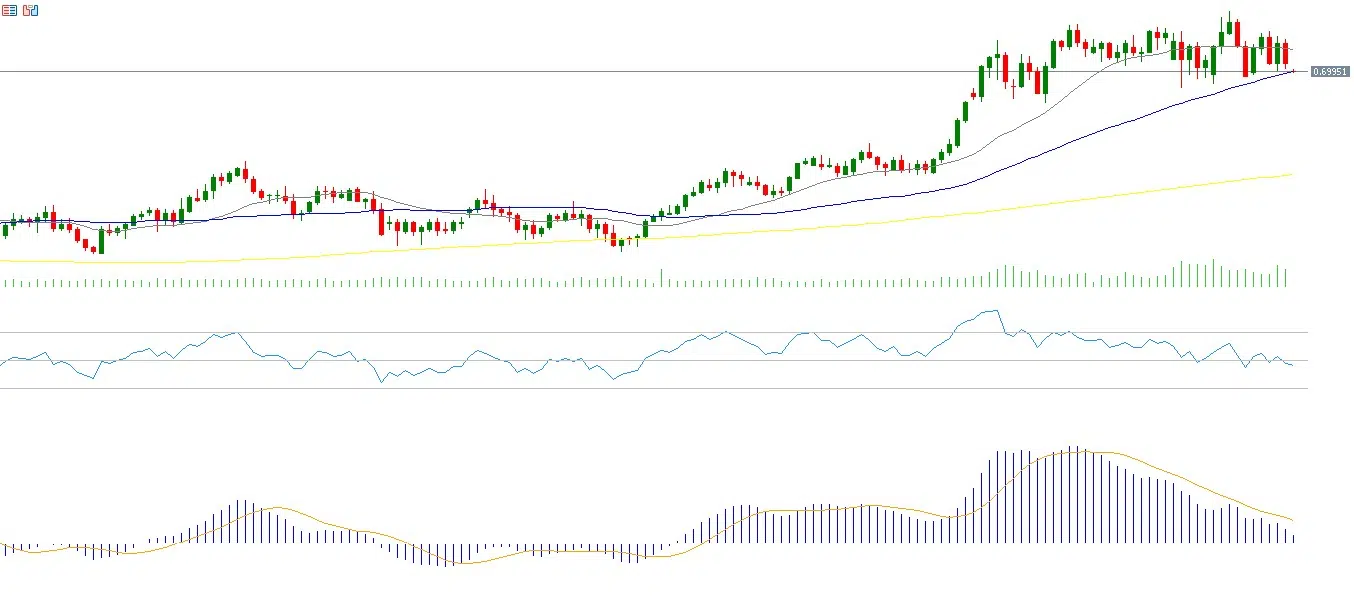
The Australian dollar against the US dollar reached 0.7187 on Wednesday, March 11, 2026, its highest level since June 9, 2022. The pair has gained about 5% since the start of the year and closed Friday at 0.7018. The Australian dollar continues to outperform among G10 currencies against the US dollar, ahead of the Swiss franc, Canadian dollar, New Zealand dollar, Norwegian krone, Swedish krona, British pound, euro, and Japanese yen. Recent Australian data shows economic resilience, supported by the hawkish stance of the Reserve Bank of Australia, which raised rates twice this year to 4.10%. The Relative Strength Index stands at 48, indicating negative momentum, while a bearish MACD crossover reinforces the likelihood of continued downside momentum.
Crude Oil
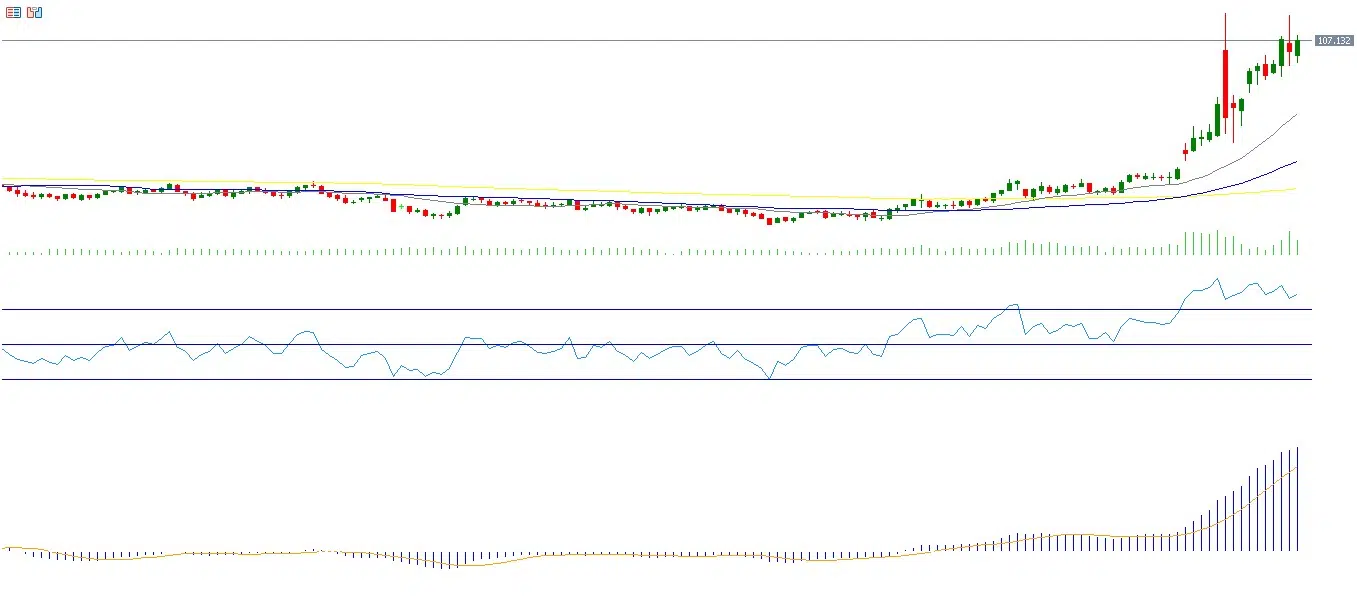
Crude oil prices rose by about 5% last week for the fifth consecutive week, closing Friday at $109.50. Prices are up about 80% year-to-date, outperforming other global assets such as gold, silver, equities, and bonds, driven by geopolitical tensions and the closure of the Strait of Hormuz. The outlook suggests continued upside, especially if the conflict escalates further. The RSI is at 76, indicating overbought conditions and strong positive momentum, while a bullish MACD crossover supports further gains.
S&P 500
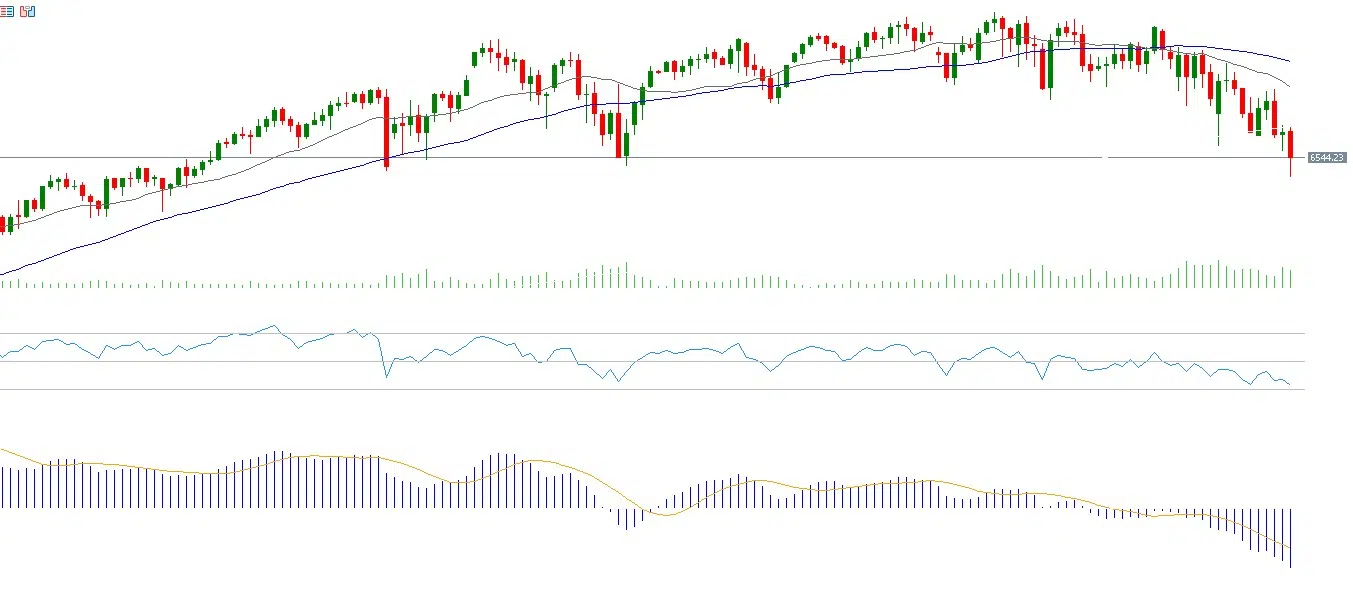
The S&P 500 declined by 1.90% last week for the fourth consecutive week, reaching 6,474 points, its lowest level since September 5, 2025, before closing at 6,506, down about 5% year-to-date. The outlook remains negative for US equities amid several key risks: inflation concerns driven by rising Core PCE and Core PPI before the war, alongside the hawkish stance of Jerome Powell; fiscal concerns due to increased military spending and a widening deficit, pushing Treasury yields higher, especially the 30-year yield; and risks to technology stocks, particularly AI-related companies, as higher energy costs pressure data centers and semiconductor supply chains. Disruptions in Taiwan could impact TSMC, which produces around 90% of the world’s most advanced chips. The RSI stands at 30, indicating bearish momentum, while a bearish MACD crossover reinforces downside risks.
Key Events This Week
Markets will closely monitor several important economic releases this week. On Monday, US construction spending data will be released. On Tuesday, PMI data for manufacturing and services will be released across Australia, Japan, the Eurozone, the UK, and the US, along with Japan’s national CPI. On Wednesday, CPI data from Australia and the UK will be released, in addition to US crude oil inventories. On Thursday, US jobless claims will be in focus. Finally, on Friday, UK retail sales and the University of Michigan consumer sentiment index in the US will be released.
Please note that this analysis is provided for informational purposes only and should not be considered as investment advice. All trading involves risk.