
Norges Bank kept its policy rate unchanged yesterday at 4.00%, as expected, marking the fourth consecutive meeting without a change. The central bank also signaled the possibility of raising interest rates to between 4.25% and 4.50% by the end of the year. Recent Norwegian economic data indicate that the economy remains resilient.
It is worth noting that Norway is one of the world’s largest energy exporters, particularly of oil and natural gas. Therefore, the current rise in energy prices, amid the ongoing war and the closure of the Strait of Hormuz, is having a positive impact on both the economy and the Norwegian krone.
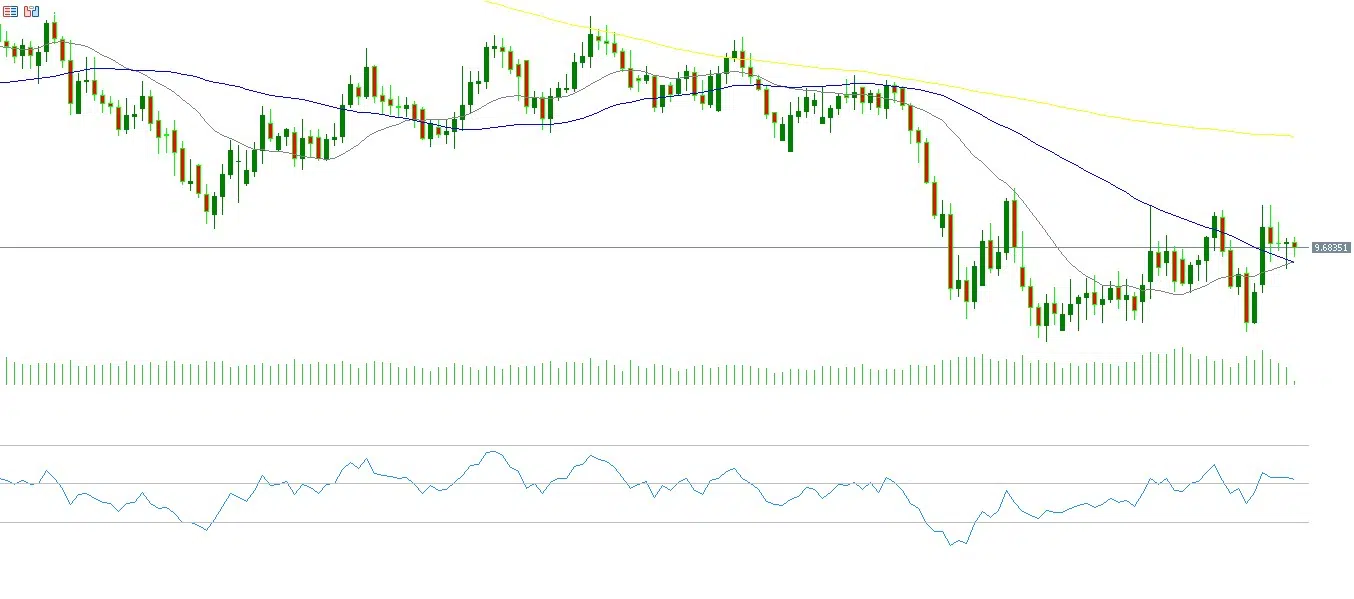
The USD/NOK pair continues its downward trend, recording a level above 9.6800 today, down approximately 4% since the beginning of the year.
The Norwegian krone continues to show strong and outperforming performance among G10 currencies against the US dollar, ahead of the Australian dollar, New Zealand dollar, Swiss franc, British pound, Canadian dollar, Swedish krona, euro, and finally the Japanese yen.
What is notable is that despite the US dollar strengthening against most foreign currencies, the Norwegian krone is moving against the trend for two main reasons: the hawkish monetary policy of Norges Bank and the rise in energy prices.
Technical analysis:
The Relative Strength Index (RSI) is currently around 50 points, indicating neutral momentum for the USD/NOK pair.
If the pair breaks the pivot level at 9.6846, it may target support levels at 9.6354, 9.5731, and 9.5239. However, if the pair moves above the pivot level, it could target resistance levels at 9.7469, 9.7961, and 9.8584.
Please note that this analysis is provided for informational purposes only and should not be considered as investment advice. All trading involves risk.