When you open a trade on EUR/USD, you may notice a small loss even before the price moves. This is normal and comes from the Forex trading spread, which is the difference between the bid price, what you would get if you sold, and the ask price, what you pay if you buy. Measured in pips, the spread is the main cost of trading and affects every position, whether you trade major, minor, or exotic pairs.
In this article, we will explain what Forex spreads are, the types you will encounter, how to calculate its cost, what makes spreads widen or narrow, and practical tips to factor spreads into your trading decisions. Understanding spreads is essential for both beginners and experienced traders.
What Is a Spread in Forex Trading?
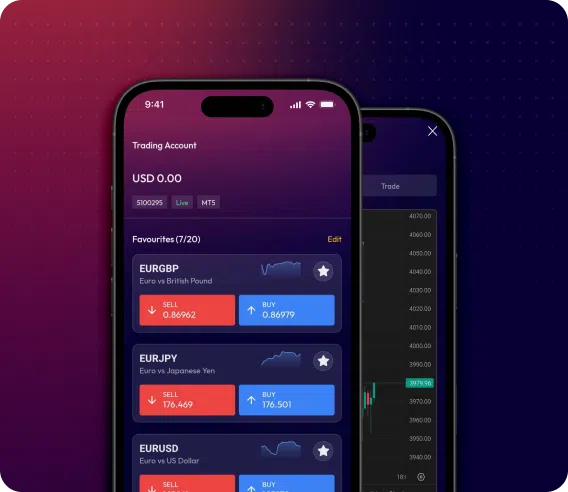
Every Forex quote you see consists of two prices sitting side by side. The bid price is the amount a broker is willing to buy the base currency from you, and the ask price is the amount the broker is willing to sell it to you. The ask is always a little higher than the bid, and that small gap between the two is the spread.
Here is a quick example. Say GBP/USD is quoted at 1.3089 / 1.3091. The bid is 1.3089, the ask is 1.3091, and the spread is 0.0002, which equals 2 pips. If you open a buy position at that moment, you enter at 1.3091, but the market would need to rise by at least 2 pips before your trade breaks even. That 2-pip difference is where the cost lives.
This is how many brokers generate revenue when they do not charge a separate commission. The transaction cost is embedded directly in the price difference, and it applies every time you open a position. For an individual trader, understanding what you are paying in spread costs on each position is one of the first steps towards informed decision-making.
What Types of Spreads Exist in Forex Trading?
Not all spreads behave the same way. The type of spread you are offered depends on the broker model (market maker, ECN, or STP) and the specific account type you have chosen. The three main categories are fixed, floating, and raw, and each comes with its own set of trade-offs worth knowing about.
What Are Fixed Spreads and What Are Their Advantages?
A fixed spread stays the same regardless of market conditions. For example, if EUR/USD has a fixed spread of 3 pips, it remains 3 pips whether it is the middle of a quiet night or during the London session. Brokers that offer fixed spreads are usually market makers and act as the counterparty to your trades.
The main advantage is predictability. You always know your trading cost, which makes risk calculations and automated strategies simpler. Fixed spreads also tend to have lower minimum capital requirements, which is helpful for newer traders.
However, fixed spreads are usually wider than floating spreads during calm market periods. You may also face requotes in extreme volatility, and you will not benefit from the tighter spreads that can appear during peak liquidity hours.
What Are Floating (Variable) Spreads and What Are Their Advantages?
Floating, or variable, spreads change according to real-time market conditions. They are common popular Forex trading platforms, where prices come from multiple liquidity providers.
During the London-New York session overlap, when Forex market hours bring peak trading activity, a floating spread on EUR/USD can drop to as low as 0.1 pip. During major news events, such as Non-Farm Payrolls, spreads can widen quickly, sometimes to 10 pips or more.
The main benefit is transparency. You are seeing true market pricing, and spreads can tighten during liquid periods. There is also no requote risk, as the spread adjusts automatically to market volatility. The downside is uncertainty, particularly around news events or off-peak hours, which can make it harder to know the exact cost of a trade in advance.
What Are Raw Spreads and What Are Their Advantages?
Raw spreads are the closest retail traders get to interbank pricing. They come directly from the liquidity pool with no broker markup, sometimes starting at 0.0 pips on major pairs during liquid sessions.
The trade-off is that brokers charge a separate commission, usually between $3 and $10 per standard lot per side. The total trading cost is therefore the raw spread plus the commission. For high-frequency traders, scalpers, or algorithmic systems, raw spreads often offer the lowest total cost and fast execution.
For traders with smaller accounts or fewer trades, the commission can reduce or erase the cost advantage, making floating spreads a simpler option.
How to Calculate the Forex Spread and Costs?
Knowing how to calculate Forex spreads costs takes just a few simple steps, and it is one of the most practical skills you can develop early on. Once you have the formula down, you can apply it to any pair, any lot size, and any account type.
Step 1: Find The Spread In Pips
The formula is straightforward:
Spread (in pips) = Ask Price – Bid Price
So if USD/JPY is shown in Forex quotes at 149.50 / 149.52, the spread is 149.52 − 149.50 = 0.02, which equals 2 pips. For JPY-quoted pairs, the pip is measured at the second decimal place (0.01), compared to the fourth decimal place (0.0001) for most other pairs.
Step 2: Determine Your Pip Value Based On Lot Size
The monetary value of each pip depends on how large your position is:
| Lot Type | Units | Pip Value (USD-quoted pair) |
| Standard Lot | 100,000 | $10 per pip |
| Mini Lot | 10,000 | $1 per pip |
| Micro Lot | 1,000 | $0.10 per pip |
For JPY-quoted pairs, the pip value is calculated slightly differently because of the way Forex quotes are presented. The formula is:
Pip value = (0.01 ÷ exchange rate) × lot size
Most trading platforms automatically calculate this and display the pip value in your position details, so you can always see the cost per pip for your trade.
Step 3: Calculate The Total Spread Cost
The basic spread calculation formula is:
Spread Cost ($) = Spread in Pips x Pip Value x Number of Lots
For example, if you are trading EUR/USD with a 2-pip spread and you open 1 standard lot, the cost looks like this: 2 x $10 x 1 = $20 per trade. A 2-pip spread on a standard lot means a cost of $20 per trade, and over time, that figure compounds, especially for frequent traders.
Now consider this: 100 trades per year at $20 per trade equals $2,000 in spread costs alone. That is before commissions, swaps, or any other fees. For traders using raw spread accounts, you would add the per-lot commission on top of whatever the raw spread happens to be at the moment of execution.
Most platforms, including MetaTrader 4 and MetaTrader 5, display the live spread directly in the quote window or the Market Watch panel, so you can see exactly what you are paying in real time.
Typical spreads across different pair categories
| Currency Pair | Typical Spread Range |
| EUR/USD (Major) | 0.1 – 1 pip |
| USD/JPY (Major) | 0.5 – 2 pips |
| GBP/USD (Major) | 1 – 3 pips |
| USD/ZAR (Exotic) | 20 – 50+ pips |
The difference between trading a major pair and an exotic pair, from a spread cost perspective, can be massive. A single round trip on USD/ZAR might cost you more in spread than a dozen trades on EUR/USD.
Why Does the Spread Change in Forex?
If you have ever watched the spread on your trading platform move in real time, you have already seen this in action. The Fx spread is not fixed unless you are using a fixed spread account. Understanding why spreads change can help you plan entries more effectively and avoid unexpected costs.
1. Liquidity
The more participants actively trading a currency pair, the tighter the spread tends to be. Higher market liquidity means buy and sell orders are matched more efficiently, which narrows the bid-ask gap. Major pairs like EUR/USD and USD/JPY have the deepest liquidity pools, which keeps their spreads low. Exotic pairs, on the other hand, have fewer participants, so USD/ZAR or USD/TRY often carry spreads of 20 to 50 pips or more.
2. Volatility
Spreads widen when prices move quickly, particularly during high-impact economic events such as Non-Farm Payrolls, CPI releases, or central bank announcements. During volatile periods, liquidity providers adjust their Forex quotes to manage risk. For example, EUR/USD spreads can jump from around 1 pip to 10 pips or more during a major release. Once the initial market reaction settles, spreads usually return to normal within minutes.
3. Trading Session And Time Of Day
Spreads follow a daily rhythm that reflects the Forex market hours. The tightest spreads tend to occur during the London-New York overlap, roughly 8 a.m. to 12 p.m. ET, when both major trading centres are active. Spreads widen during the late Asian and early Sydney sessions, on Sunday market open, near Friday close, and on public holidays, when trading volumes drop.
4. Currency Pair Type
This ties back to liquidity. Major pairs (EUR/USD, GBP/USD, USD/CHF) carry the tightest spreads because they attract the most volume. Minor or cross pairs like EUR/NZD or GBP/CAD sit in the middle range, typically 2 to 5 pips. Exotic pairs involving emerging market currencies tend to carry the widest spreads, often 10 to 50 pips or more, due to lower volume, higher volatility, and greater hedging costs for liquidity providers.
5. Broker Model and Policy
The type of broker you trade with directly affects the spread you see. Market makers set their own fixed spreads with a built-in markup. ECN and STP brokers pass through live interbank pricing with either a floating spread or a raw spread plus commission. The broker’s relationships with its liquidity providers, its internal risk management policies, and its fee structure all play a role. When choosing a Forex broker, comparing the spread structure across different account types is one of the most practical things you can do.
6. News Events and Geopolitical Developments
Scheduled events such as central bank rate decisions, GDP releases, and employment data create bursts of uncertainty. Unscheduled events, like geopolitical crises or surprise policy announcements, can have even bigger effects. MarketBulls notes that during the Brexit referendum, spreads fluctuated sharply as traders reacted to uncertainty. The Bank for International Settlements also highlights that bid-ask spreads widen when exchange rate volatility rises. Checking an economic calendar before trading can help you avoid entering a position just as spreads are about to spike.
What Are The Best Forex Spread Trading Strategies?
Understanding how spreads work is only half the picture. The other half is using that knowledge to shape your actual approach. Traders who actively account for spread costs in their planning tend to have a clearer view of what each position truly costs and what it needs to return. Here are three practical approaches to consider.
Low Spread Currency Pairs Strategy
This is the most straightforward spread-conscious approach: stick to the highest-liquidity major pairs where spreads are structurally the tightest. EUR/USD, USD/JPY, and GBP/USD consistently offer spreads under 1 to 2 pips, which means less ground to cover before a trade moves into positive territory.
For day traders who open multiple positions per session, the compounding effect of tighter spreads is noticeable over weeks and months. Pairing this approach with technical analysis for timing entries around support and resistance levels, moving averages, or chart patterns can help you refine entries further. If minimising spread cost is a priority, staying away from minor and exotic pairs during your active trading windows makes good practical sense.
Time-Based Spread Trading
Spreads are not random. They follow fairly predictable patterns throughout each trading day, driven by when the major financial centres are open and active. The single best window for tight spreads on most pairs is the London-New York overlap, from about 8 a.m. to 12 p.m. ET, when trading volume across both centres is at its peak.
On the other end, spreads tend to widen during the late Asian session, on Sunday evenings when the market re-opens, and in the final hours of Friday trading. Holidays in major financial centres also tend to thin out liquidity and push spreads wider. A practical habit worth developing: check the economic calendar each morning and note any high-impact releases scheduled during your planned trading window. If a major data release is imminent, you might want to wait a few minutes after the numbers hit for spreads to settle back down before entering a position.
Scalping With Tight Spreads
Scalping is the strategy most sensitive to spread costs, by a wide margin. When each trade targets just 2 to 10 pips, even a 0.5-pip difference in spread can mean the difference between a positive and a negative session across dozens of trades.
Scalpers typically rely on ECN or raw spread accounts to access the tightest possible pricing, and they trade exclusively during peak liquidity hours on major pairs. A 1-pip spread on EUR/USD during a scalp means the price needs to move at least 2 pips in your favour before you see any return, which cuts deeply into the kind of small, fast moves that scalpers look for.
On the technical side, scalpers tend to work off 1-minute or 5-minute charts, using indicators like Bollinger Bands, RSI, MACD, and short-period EMAs to time entries. Many use Forex trading robots or Expert Advisors (EAs) because automated systems can execute faster than manual clicks and can be programmed to factor in real-time spread costs before triggering a trade.
One thing to keep in mind: scalping demands fast execution. If your platform has high latency or slow order fills, the price can move against you in the fraction of a second between clicking and getting filled. Platform performance matters here more than in almost any other trading style.
Conclusion
The Forex spread is a small cost on each trade, but it adds up over time and affects all types of traders. Fixed spreads give certainty, floating spreads can offer tighter pricing, and raw spreads get you closest to interbank rates, though commissions apply. Understanding your spread in actual monetary terms helps you plan trades and set realistic targets.
Focusing on major Forex currency pairs, trading during high-liquidity sessions, and checking the economic calendar are simple ways to reduce spread costs. Being aware of spreads gives you more control over your trading decisions from day one. If you’d like to practice monitoring spreads in a risk-free environment, consider opening a demo account to familiarize yourself with how spreads behave across different pairs and market conditions.
FAQ
How Do Spreads Affect Forex Profits?
Every trade opens at a small deficit equal to the spread. The market must move in the trader’s favour by at least the spread amount before the position reaches break-even. Wider spreads require a larger favourable move to become net positive, which is why short-term and high-frequency strategies are most affected. Even longer-term traders accumulate spread costs across many positions over the course of a year, so it is a factor at every level.
Is a Higher or Lower Spread Better?
A lower spread is generally more favourable because it reduces the break-even threshold and lowers the cost of each trade. That said, “lower spread” should be evaluated as total all-in cost. A broker offering a 0.0-pip raw spread with an $8 per lot commission may cost more per trade than one offering a 0.8-pip floating spread with no commission, depending on the trader’s volume and frequency.
What Is a Good Spread in Forex?
A good Forex spread depends on the pair and your trading style. Major pairs like EUR/USD and USD/JPY are excellent at 0.1 to 1 pip, while minors are usually 2 to 5 pips and exotics can be 10 to 50 pips or more. Traders seeking tight costs, such as scalpers, aim for spreads below 1 pip on the most liquid pairs.
Why Do Spreads Widen During News Events?
Spreads widen during major economic announcements because liquidity providers adjust prices to manage increased risk and volatility. When markets move quickly, brokers expand the bid ask gap to protect against sudden price swings, which temporarily increases trading costs.
Do All Brokers Offer the Same Spreads?
No, spreads vary between brokers based on their pricing model, liquidity providers, and account types. Market makers often offer fixed spreads, while ECN and STP brokers provide floating or raw spreads plus commission.
Can You Trade with Zero Spread?
Some brokers advertise zero or 0.0 pip spreads on raw accounts, but a commission is usually charged per lot. The total cost should always be calculated as the combined spread and commission, rather than looking at the spread alone.