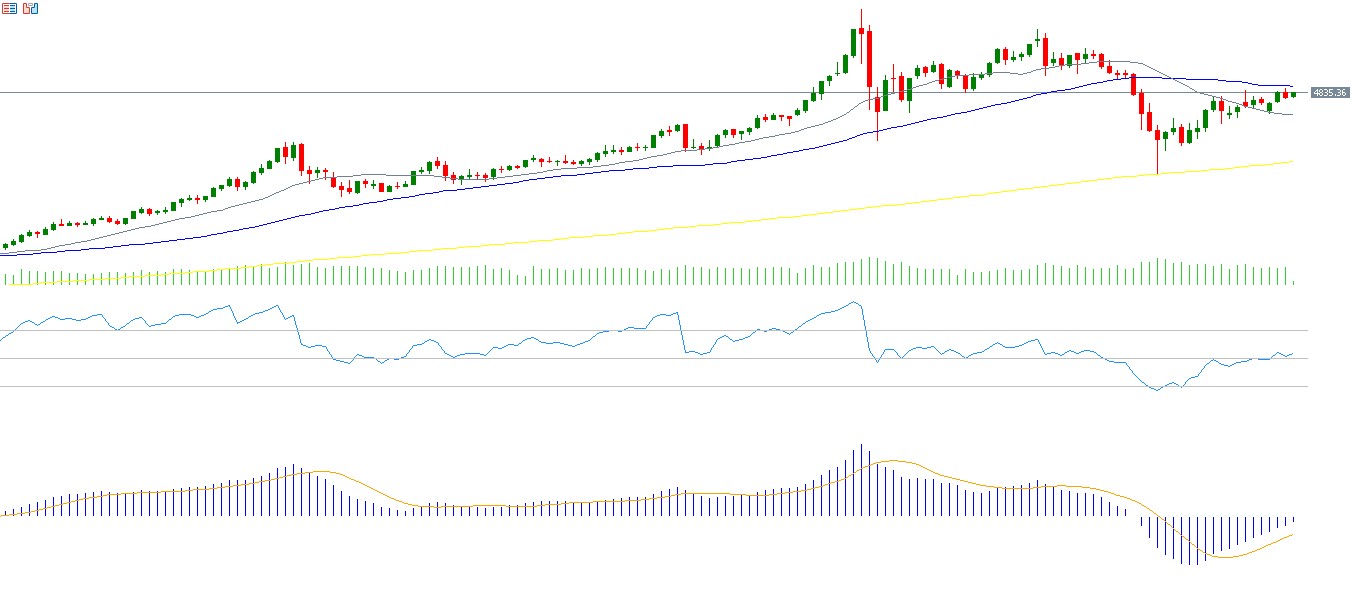
Gold prices rose yesterday to $4,871, increasing by about 12% since the beginning of the year, outperforming U.S. stock indices, U.S. bonds, the U.S. dollar index, cryptocurrencies, and other precious metals such as silver. The main reason behind this rise is the easing of geopolitical tensions, amid ongoing negotiations between the United States and Iran and optimism about the possibility of reaching an agreement before the ceasefire ends on February 21.
It is worth noting that gold is traditionally considered a safe-haven asset that investors turn to during periods of turmoil, wars, and uncertainty. However, gold has not fully played its role as a safe haven during this conflict. The main reason is the rise in energy prices, particularly oil and gas, which increases inflationary risks and affects the direction of monetary policies at central banks, especially the Federal Reserve. Expectations indicate the possibility of keeping interest rates elevated for a longer period or even raising them again, which supports the U.S. dollar index and puts downward pressure on gold, as it does not generate any yield.
Recent U.S. inflation data for March showed an increase, with headline inflation reaching 3.3% while core inflation recorded 2.6%, both still above the Federal Reserve’s 2% target. If energy prices continue to rise, further inflationary pressures may emerge in the coming period, which could negatively affect gold prices.
However, under most potential economic scenarios—whether an economic recession, stagflation, or even a continuation of elevated inflation rates—and amid the uncertainty surrounding developments in the war as well as the unresolved tariff issue, gold remains one of the most prominent assets likely to rise.
Some short-term pressure on gold prices may occur due to the need for U.S. dollar liquidity. Nevertheless, positive momentum for gold could appear over the medium and long term as central banks continue purchasing gold, particularly the People’s Bank of China, which has been buying gold for the seventeenth consecutive month. More importantly, gold ultimately serves as a hedge against inflation, a store of value, and a source of confidence, unlike paper currencies that lose value as global debt rises and the global economy slows, especially in advanced economies.
The Relative Strength Index (RSI) is currently at 54 points, indicating positive momentum for gold. Meanwhile, the MACD indicator shows a bullish crossover between the blue MACD line and the orange signal line, providing upward momentum for gold. The next challenge lies in reaching the resistance level represented by the 200-day moving average at $4,900 and breaking above it to target the psychological level of $5,000.
Please note that this analysis is provided for informational purposes only and should not be considered as investment advice. All trading involves risk.