According to the 2025 Triennial Survey from the BIS, the Forex market processes about $9.6 trillion in trades every day. This makes it the largest financial market in the world. However, data from the European Securities and Markets Authority shows that around 74% to 89% of retail CFD accounts lose money.
These results are usually not caused by bad luck or unfair markets. In many cases, they come from common Forex trading errors that beginners repeat. The good news is that most of these mistakes can be avoided once you understand them.
In this guide, we explain common pitfalls and what you can do differently in your next trade.
8 Common Trading Mistakes in Forex And How To Avoid Them
These are not rare mistakes that affect only a few traders. They happen very often, and many beginners repeat them. If you have been trading for less than a year, you may recognise some of them.
1. Trading Without A Plan
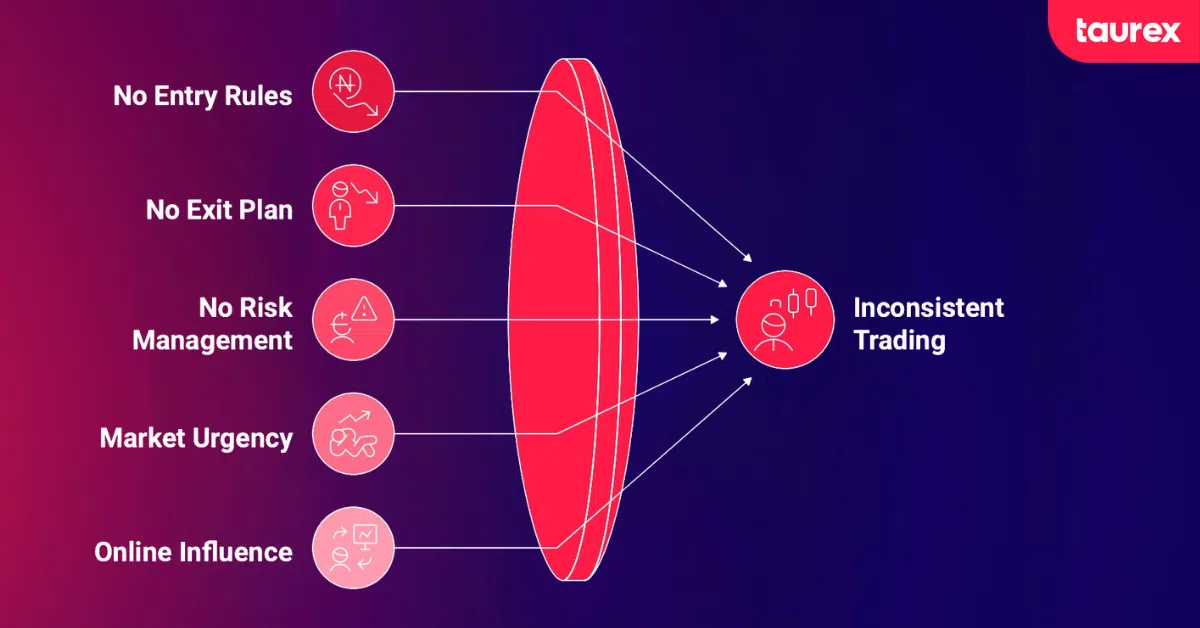
This is one of the most common mistakes for beginners. You open your trading platform, see a currency pair moving, and enter a trade because it looks like a good opportunity. There are no clear entry rules, no exit plan, and no set amount you are willing to lose.
This often happens because the market feels fast and urgent. Prices move quickly and it can feel like you might miss a good trade if you wait. That pressure can push traders to open positions without a clear idea of why they are trading.
The result is inconsistency. One day, you may trade EUR/USD based on a chart pattern. The next day, you may trade GBP/JPY because someone mentioned it online. Without a plan, it is difficult to see what works and what does not.
How to avoid it: Create a simple trading plan before you start trading. It can include which currency pairs you will trade, what signals you will use to enter a trade, when you will exit, and how much you are willing to risk on each position. The key is to follow the plan consistently. Many brokers note that overtrading is more common among traders who don’t have clear Forex trading rules or a defined strategy.
2. Ignoring Risk Management
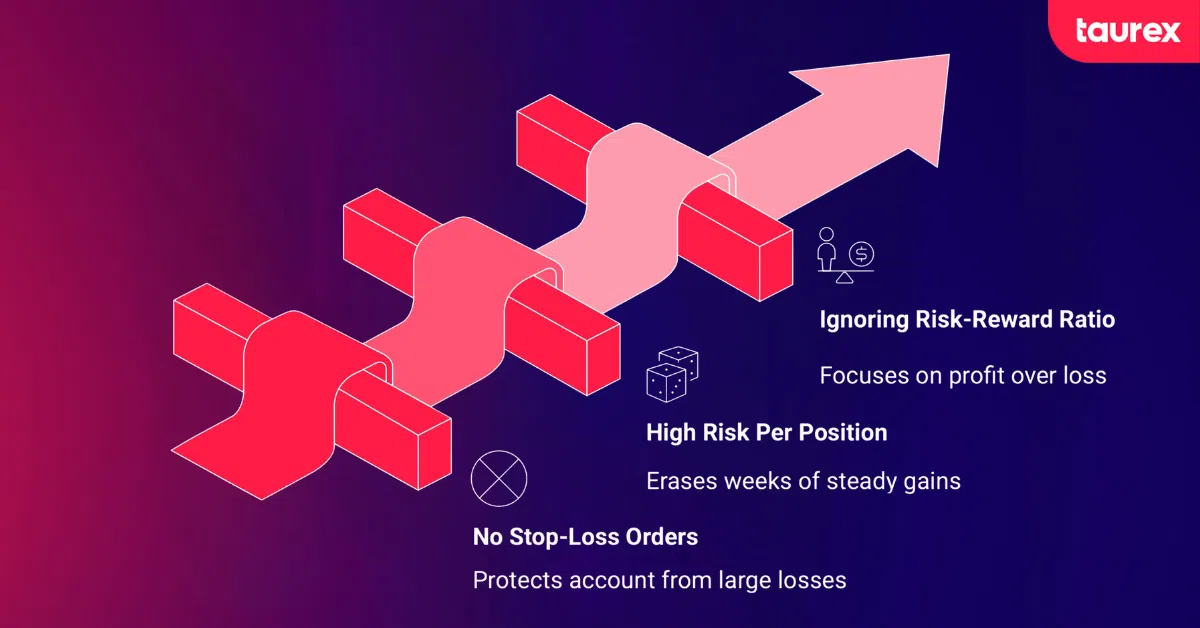
If a trading plan guides your decisions, Forex risk management helps protect your account. Many beginners ignore it. They open trades without stop-loss orders, risk a large part of their account on one position, or trade without thinking about the risk-to-reward ratio.
This usually happens because traders focus more on potential profit than on possible loss. But in reality, one bad trade can erase weeks of steady gains. After several losses, the account drawdown can become so large that recovery becomes very difficult.
Many professional traders risk only 1 to 2% of their account on a single trade. Traders who lose consistently often risk much more, sometimes 10 to 20% per position. This difference can determine whether a trader survives a losing streak or loses the entire account.
How to avoid it: Set a stop-loss order before entering every trade. Limit your risk to about 1 to 2% of your total account balance per position. It can also help to aim for a risk-to-reward ratio of at least 1:2, where the potential profit is at least twice the amount you risk.
3. Overleveraging
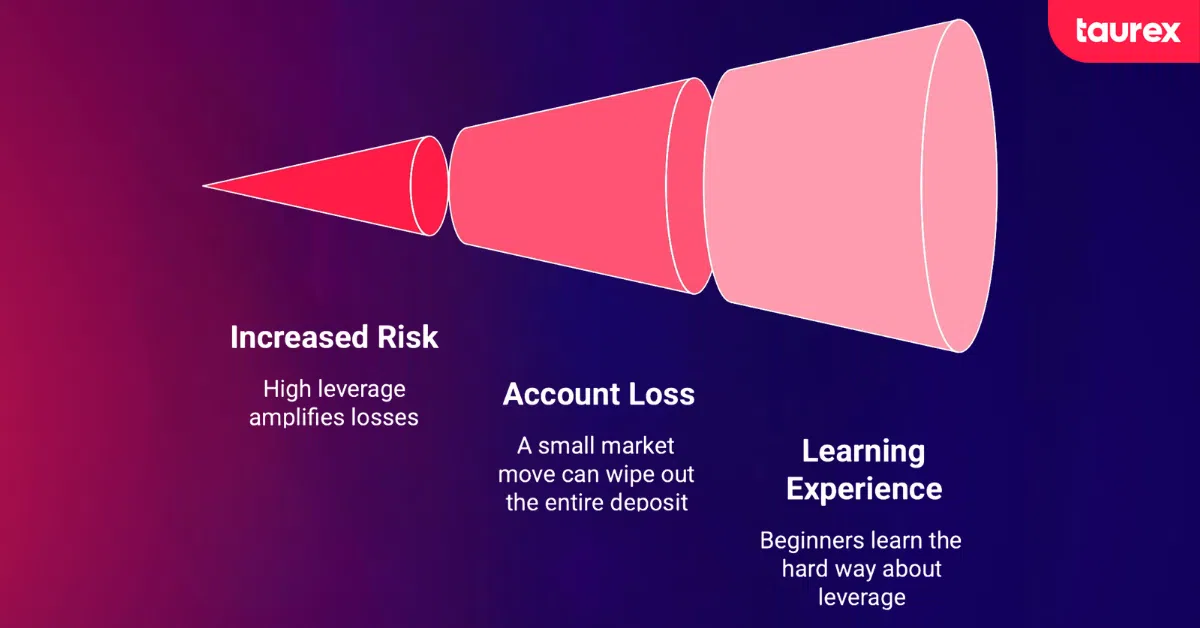
Leverage is what makes Forex accessible. It allows you to control a large position with a relatively small deposit. But it cuts both ways, and beginners tend to learn this lesson the expensive way.
The temptation is obvious: if 1:10 leverage can double a small move, why not use 1:100 or even 1:500? The maths looks appealing on paper. For example, if you are using 1:100 leverage, even a relatively small adverse price move can consume a large share of your margin and trigger rapid losses. Your entire deposit, gone from a fluctuation that barely registers on a daily chart.
Overleveraging can be one of the reasons retail Forex accounts lose money. Leverage itself may not be the problem, but beginners sometimes use high leverage before they have enough experience or a clear risk management framework.
Regulators in several major markets have introduced limits to help protect retail traders. For example, the Financial Conduct Authority (FCA) confirmed restrictions that cap leverage for retail CFD trading at 30:1 on major currency pairs, with lower limits for more volatile assets.
How to avoid it: It may help to treat margin and leverage as tools rather than shortcuts to higher profits. Traders can focus on position sizing and risk management first, and calculate how much of their account balance they may be risking before opening a trade. If risk controls are weak, higher leverage can increase losses more quickly.
4. Letting Emotions Control Decisions
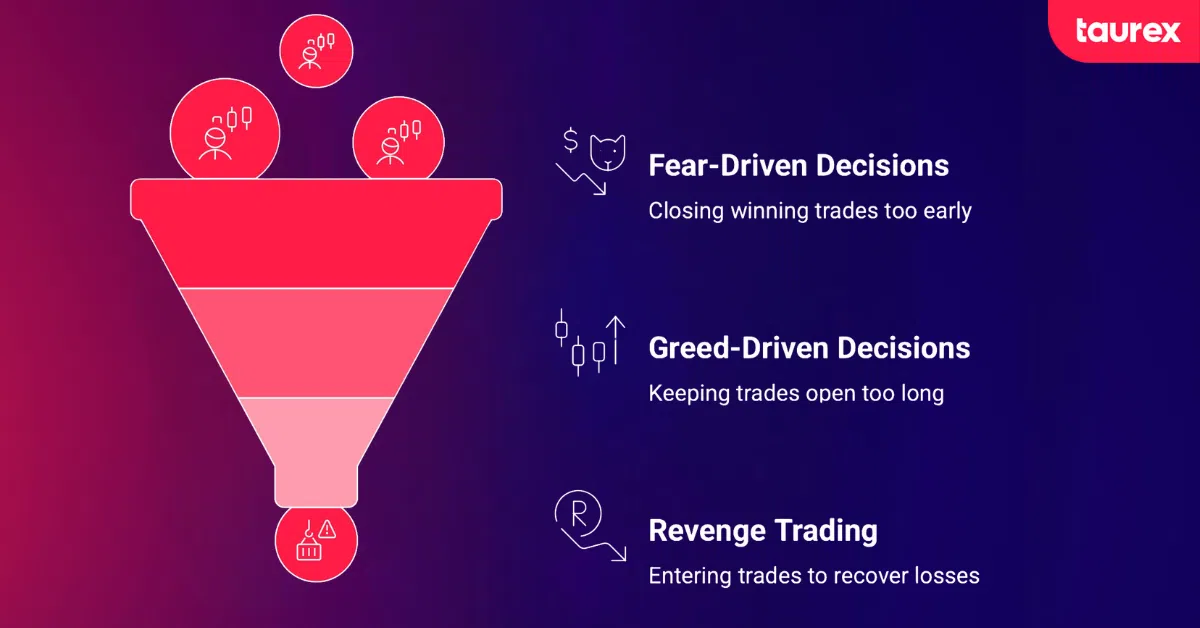
Trading with real money can change how people behave. Fear may cause you to close a winning trade too early because you worry the profit will disappear. Greed may lead you to keep a trade open longer than planned, hoping for more profit. After a loss, some traders may quickly open another trade to try to recover the money.
This behaviour is often called revenge trading. A trader takes a loss and then enters another trade mainly to win the money back. These trades are usually rushed and poorly planned, which can lead to even bigger losses.
Research cited by Dukascopy suggests that emotional trading is one of the most common reasons traders fail, second only to overleveraging. When fear and greed take control, traders often stop following their strategy.
How to avoid it: Keeping a trading journal may help you stay aware of your behaviour. After each trade, you can note the setup, the reason for entering, the result, and how you felt during the trade. Some traders also set simple rules, such as stopping trading for the day after two consecutive losses, to help keep emotions under control.
5. Holding Losing Trades For Too Long
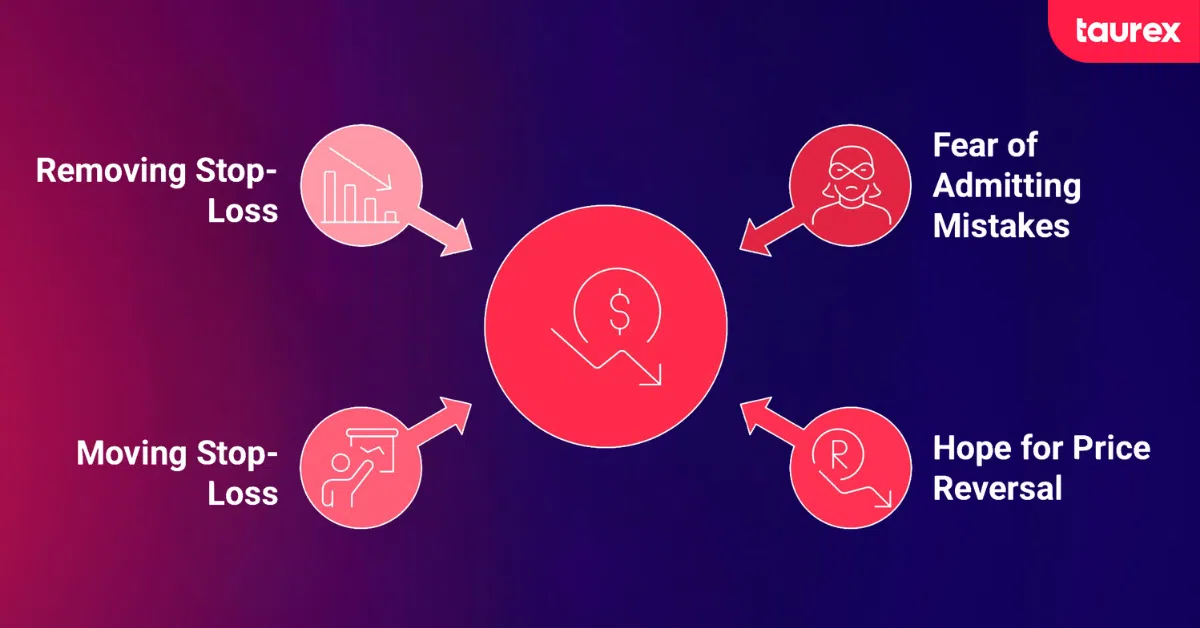
Some beginners keep trades open even when they go against them. They may move their stop-loss further away or remove it, hoping the price will come back. This can turn a small, manageable loss into a much bigger problem.
Traders may do this because accepting a loss feels like admitting a mistake. Skilled traders close losing trades quickly and move on, knowing new opportunities come. The opposite mistake is holding winning trades too long and watching profits disappear.
How to avoid it: Set your stop-loss before entering a trade and avoid changing it unless you are using a trailing stop in your trade’s direction. Accept that losses are normal and focus on keeping them small and controlled.
6. Chasing The Market After Missed Moves
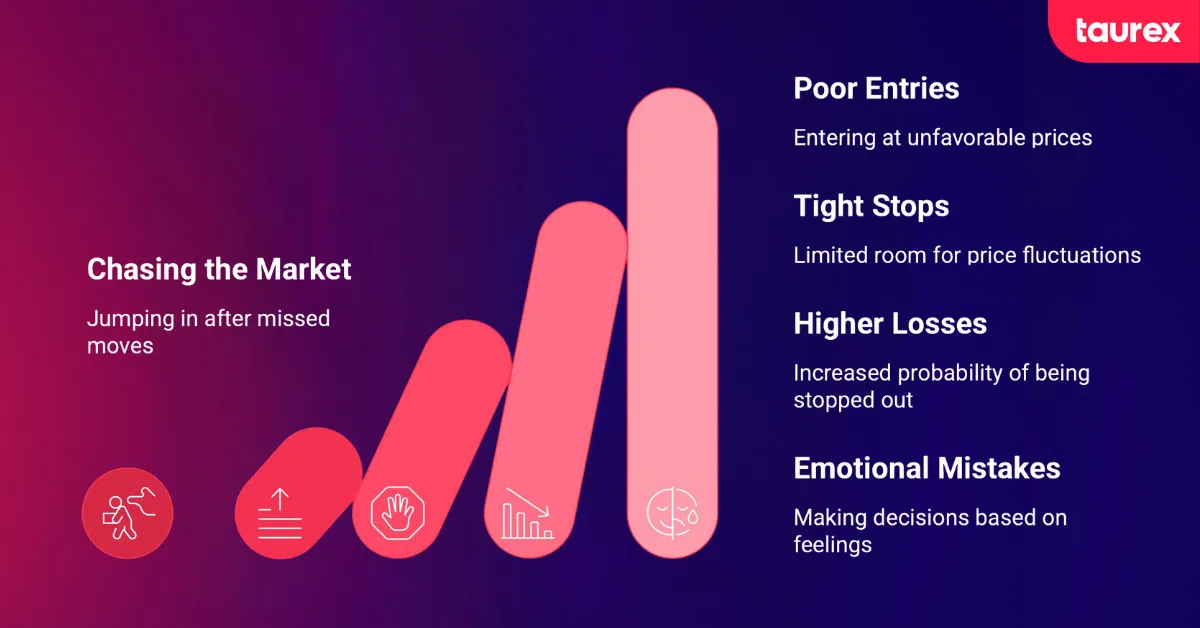
Sometimes a currency pair spikes quickly, and you miss the entry. Beginners may jump in at the new price, hoping the move continues. This is called chasing and can lead to poor entries, tight stops, and higher chances of being stopped out.
Sometimes, traders who chase trades often lose money faster, paying more in spreads and making more emotional mistakes.
How to avoid it: The Forex market runs nearly 24 hours a day, five days a week. If you miss a move, wait for the next setup. Use alerts at price levels that interest you and only enter trades that meet your plan. Patience can be one of the most important trading decisions you make.
7. Ignoring Market News And Volatility
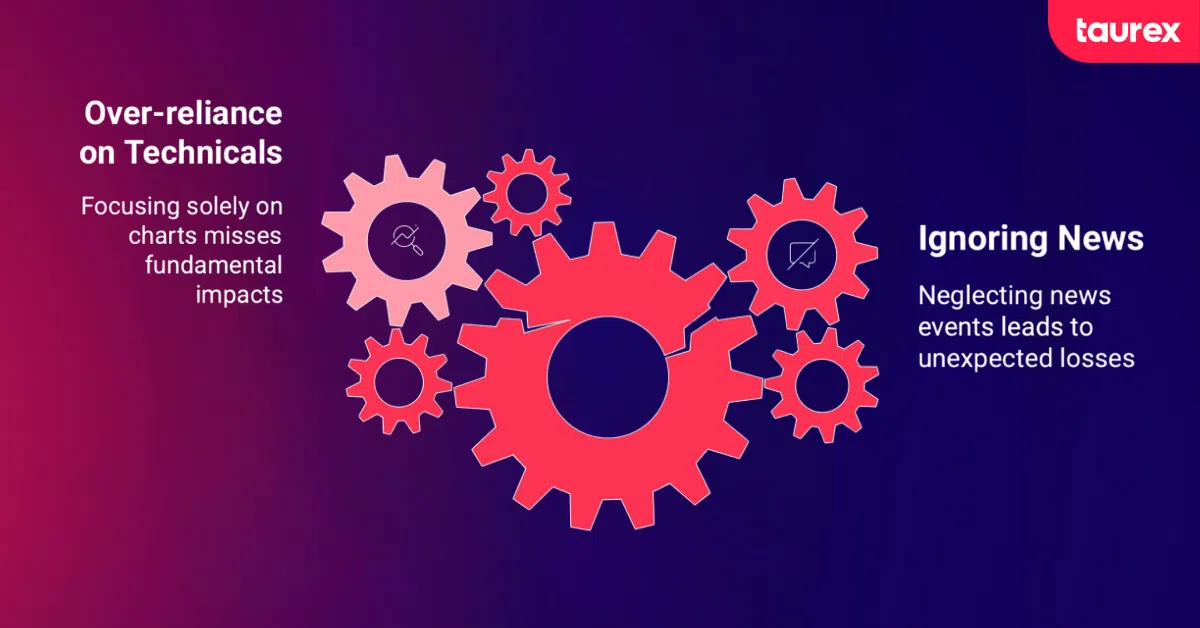
Even a perfect Forex chart pattern can be disrupted by unexpected news, like central bank rate decisions or major economic releases such as NFP or CPI. These events can cause sudden price spikes, increased spreads, or sharp reversals, making it hard to predict moves based on technicals alone. Beginners who focus only on charts may get caught off guard by these rapid changes.
Some experienced traders choose to stay out of the market during major news events or adjust their positions to account for potential volatility. For example, liquidity can temporarily drop, slippage can occur, and stop-loss orders may trigger unexpectedly.
How to avoid it: Check the economic calendar before each session. If a high-impact release is coming, either sit out or reduce your position size. You don’t need to become a macro expert, but being aware of potential volatility helps you manage risk better and avoid sudden losses.
8. Choosing The Wrong Forex Broker
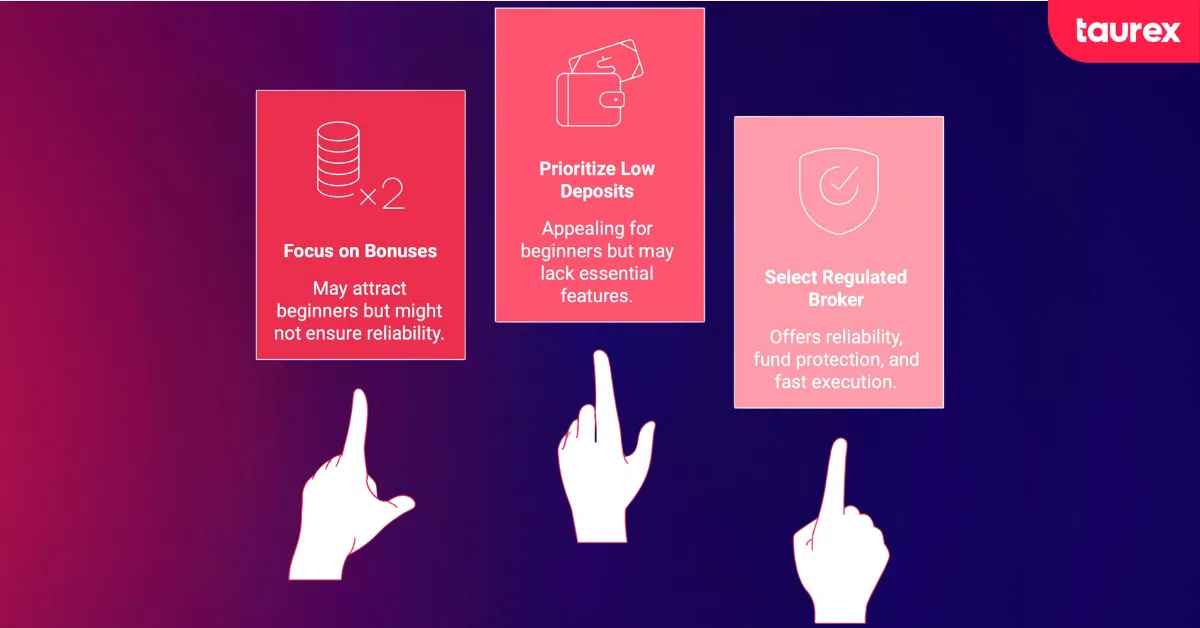
Your choice of broker can impact how quickly your trades execute, how much you pay in spreads and fees, and whether your funds are safe and accessible. Beginners often focus on bonuses or low minimum deposits, but these features do not always mean the broker is reliable.
Using a regulated broker with clear conditions, strong fund protection, and fast execution can make trading easier and safer over the long term.
How to avoid it: Check the broker’s regulatory status with authorities like FCA, ASIC, or CySEC. Make sure client funds are in segregated accounts, review spreads and commissions, and test execution on a demo account before trading with real money.
Why Do Most Day Traders Fail? The Patterns Behind Losing in Forex
Most beginners enter Forex with ideas shaped by social media and marketing. Ads promising quick profits attract people who are eager for fast results, which can lead to emotional decisions and over-leveraging. Research shows campaigns promising “financial freedom in 30 days” often draw traders who struggle to manage risk.
Another challenge is the gap between demo and live trading. Demo accounts are good for learning platform tools and testing strategies, but they do not capture the stress of real money at risk. A 30-pip move against a live trade can feel very different from a demo trade.
Research says that 80% of day traders quit within the first two years. The ones who last often focus on process rather than outcomes. They follow their plan consistently, stay disciplined, and accept that trading is a slow, methodical process. These are the traders who tend to still be active after three years.
If you are starting out, building the right habits early can help you avoid these common cycles. Our educational resources and guides are designed to help you develop that foundation at your own pace. You can also open a demo account with Taurex today and start trading with virtual funds to build your skills confidently.
FAQ
What are the most common Forex trading mistakes beginners make?
Common Forex trading mistakes include trading without a plan, ignoring risk management, overleveraging, letting emotions drive decisions, and choosing an unregulated broker. These often come from a lack of preparation and unrealistic expectations. Learning structured strategies and following risk rules can help prevent these forex trading errors.
How can I avoid overtrading in Forex?
Overtrading often happens when there are no clear rules for valid setups. Define exactly when you will enter a trade and stick to it. Setting daily trade limits or a maximum loss per day can also prevent impulsive trades.
What should I look for when choosing a Forex broker?
Check for regulation from trusted authorities, segregated client accounts, clear spreads and commissions, and fast execution. Be careful with brokers offering large bonuses with strict withdrawal conditions. Testing the platform on a demo account can help you avoid surprises.
Can a demo account help reduce Forex trading mistakes?
Yes, demo accounts let beginners practice trading, test strategies, and learn platform features without risking real money. They are useful for building skills, but they do not replicate the emotions of live trading. Treat them as preparation for trading with real funds.
How much of my account should I risk per Forex trade?
Many traders may choose to risk around 1% to 2% of their account on a single trade. This approach can help limit losses and protect the account during losing streaks. Keeping risk small may make it easier to stay consistent over time.